Why More Women Are Switching To Safety Razors

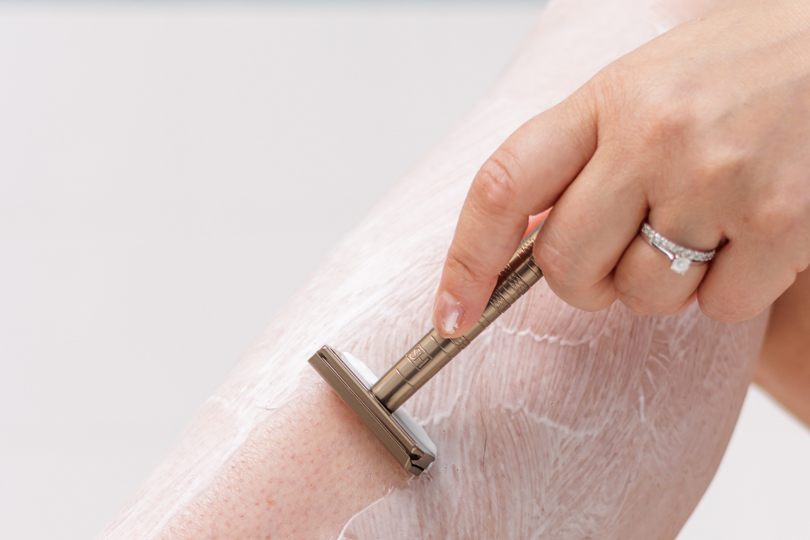
Many of us stick to cartridge razors out of habit — they’re easy to find and easy to use. The trade-off is cost and comfort. Multi-blade cartridges can cause nicks and razor burn, and their refills are one of the most expensive everyday essentials in the bathroom.
That’s why many women have started turning to safety razors as the sensible alternative. They’re made to last, are way cheaper for refills (you just replace a 10 cent blade), and cut cleanly at the surface of the skin.
The problem is that they take practice. The blade angle and pressure matter, and getting used to that can feel awkward if you’ve only used cartridges. Especially for sensitive or tricky areas.
That’s where the Henson Razor comes in; it’s designed by engineers from Canada’s aerospace industry, and it combines the benefits of a safety razor with the ease-of-use of a cartridge. The result is a smoother, more comfortable shave without the expense of constant refills.
How much money do I save with a Henson Razor?
The numbers are staggering, especially when you look at how much you’d be spending with cartridge refills the rest of your life.
A typical cartridge razor sells for roughly $15 upfront, with replacement heads priced around $8 to $13 per pack. On average, that’s about one pack per month — or $60 to $150 in refills over the course of a year. Over five years, that adds up to thousands spent on disposable plastic that ends up in the trash.
The Henson Razor turns that math completely around. Its handle is a one-time investment, precision-machined from aerospace-grade aluminum or titanium, and replacement blades cost about ten cents each. Even with a fresh blade every week, you’d spend no more than $4 or $5 a year.
Over a five-year span, the comparison on replacements is clear: thousands on cartridges vs roughly $25 total for the Henson blades. It’s more than just a lower-cost option — it’s savings that keep growing every year.
But will the Henson razor work for sensitive areas?
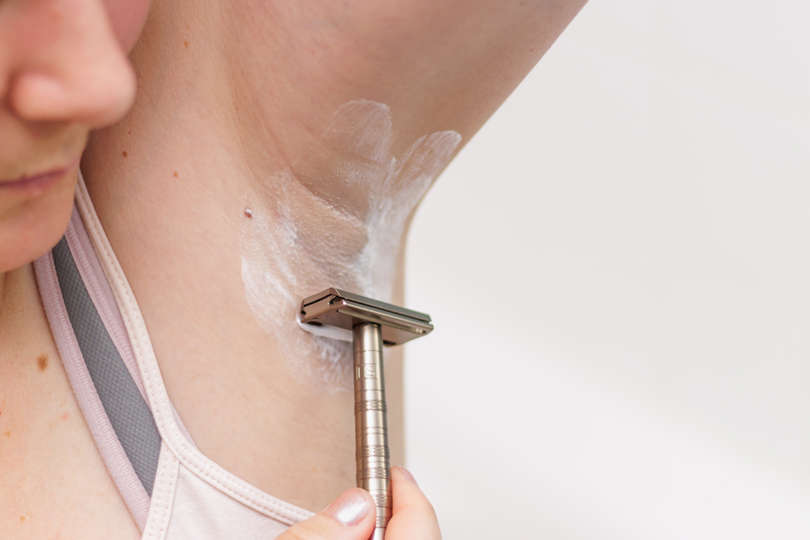
Let’s take a step back: cartridge razors cause irritation because of how they work. Multiple flexible blades pull each hair slightly above the skin before cutting it, then slice again as it retracts. It feels close at first, but that lift-and-cut motion leads to redness, bumps, and ingrown hairs — especially in sensitive areas like underarms or along the bikini line.
Traditional safety razors improve on that by using a single blade that cuts cleanly at the surface. But they can still feel harsh if the blade isn’t held at the right angle and with the right pressure. Even small vibrations, known as “blade chatter,” can leave tiny scratches that you feel as post-shave irritation.
The Henson Razor eliminates that blade chatter movement. Its head clamps the blade so firmly and evenly that there’s no room for vibration at all — think of it like tightening a guitar string until it can’t buzz. The edge stays fixed, so it glides across the skin instead of skipping over it.
The result is a smooth shave that feels consistent, even on areas where the skin is most delicate.
How does Henson make its razors?
Henson got started before making razors by making aerospace parts, including for the mars rover. The same level of precision in aerospace manufacturing is used to make the razor.
The razor works because each one is machined to tolerances (think margin of error in the manufacturing) measured in microns — the same level of accuracy used in aerospace manufacturing. That means the gap and angle that hold the blade are controlled within one-tenth the width of a human hair.
It’s like the difference between machining a part for a satellite and stamping out a disposable toy.
That consistency matters. A perfectly supported blade doesn’t vibrate or flex when it touches the skin, so it glides smoothly rather than scraping. The lack of “chatter” — those tiny edge vibrations that cause micro-cuts — is what keeps irritation to a minimum.
In testing with MIMOSA Diagnostics, skin shaved with a Henson showed lower redness and faster recovery compared to multi-blade cartridges.
2 billion razors in landfills
Each year, roughly two billion disposable razors and cartridges are thrown away in the United States alone. Most are made from layered materials — plastic, rubber, and metal — that can’t be separated for recycling. Once dull, they’re simply tossed, and every part of them remains intact for decades.
Because of that mixed construction, nearly every razor ever sold still exists somewhere: in landfills, incinerators, or waterways. The convenience of cheap refills comes at the cost of long-term plastic buildup that won’t break down in any meaningful timeframe.
The Henson Razor eliminates that waste stream. Its handle and head are machined entirely from aluminum or titanium — metals that don’t degrade and can be fully recycled. The only disposable part is the thin steel blade, which can be safely collected and recycled with other metals.
A single Henson replaces a lifetime of plastic cartridges, removing an entire category of waste.
The last razor you’ll ever buy
A Henson Razor isn’t designed around product cycles. It has no springs or plastic parts that can wear down or fail. The geometry that makes it precise today will remain the same decades from now.
Metals like these don’t fatigue under normal use, and there are no moving pieces to replace. With minimal care — a rinse and left to dry after each use — the razor will continue performing as it did on day one.
It’s a tool you can use for the rest of your life, and then passed along to your children and grandchildren.
You can see the different models and color options for Henson razors right here.