Parenting Styles from Around the World

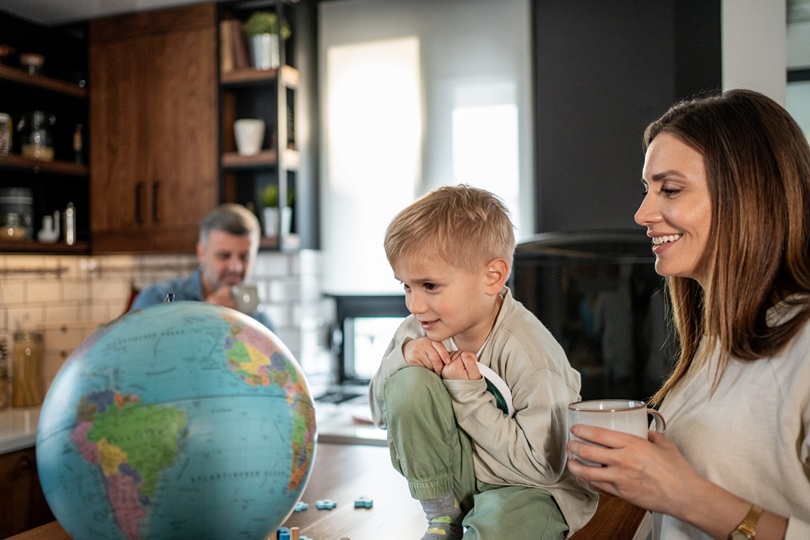
Much has been made of the comparison of the Canadian “Cultural Mosaic” and the United States’ “Melting Pot” analogies for how different cultures are integrated into our communities. And why there is no real definition of Canadian parenting (until now maybe, ahem) it makes sense that many aspects of some well-known “national styles” of parenting that often get written about in contrast to one another make up what it means to be a Canadian parent. Here, in a nutshell, is an overview of global parenting styles that make up our cultural parenting mosaic:
Parenting Styles from Around the World:
French Parenting (a.k.a. Bringing Up Bébé)
The key traits of French parenting is an emphasis on self-control, patience, and independence. So yes, French children eat everything and French parents are often described as teaching children to wait (for food, attention, or treats) and to entertain themselves. Of course food culture is huge for parents in France. Kids are expected to eat what adults eat, sit politely at the table, and develop sophisticated tastes early.
French parents typically avoid helicoptering. They give structure and clear boundaries and expect children to operate within them without constant intervention.
German Parenting
German parenting highly emphasizes independence, the freedom to explore, and places a very high value on unstructured outdoor play. There is an overall cultural embrace of Kinderfreude (children’s joy) and Selbständigkeit (self-reliance). Forest Kindergartens (Waldkindergarten), where children spend much of the day outdoors, are growing in popularity.
With German parenting, discipline is consistent but it is not authoritarian. Children are expected to respect rules and also to develop responsibility and resilience.
Scandinavian Parenting (Denmark, Sweden, Norway)
The key traits of Scandinavian parenting focus on equality, community, and closeness, with a heavy emphasis on family time, emotional openness, and outdoor life: friluftsliv ( “open air living”).
Relaxed, child-centered, and supportive of autonomy, Scandinavian parents are supported with a strong social safety net (namely long parental leave and affordable childcare).
Denmark is famous for focusing on raising “happy” children, valuing well-being over achievement. This aligns well with the hygge aesthetic for which Danes are also famous.
American Parenting
If there is a singular American parenting style, its key traits would be being achievement-oriented, individualistic, and diverse (since the U.S. is also so varied). This style would often be characterized by competitiveness in sports, academics, and all extracurriculars.
If comparing with international parenting styles, American parents may push for independence early on (sleeping in own room, doing chores young) but can also be highly involved (helicopter or snowplow parenting or intensive parenting).
Chinese Parenting (sometimes called “Tiger Parenting”)
The key focus of the “Tiger Mom” is academic excellence, discipline, and respect for authority, with very high expectations in school and extracurriculars. Tiger parents may be more directive, making decisions for children rather than prioritizing their autonomy and independence.
And while the “Tiger Mom” stereotypes are definitely exaggerated, in Chinese families there is a cultural emphasis on hard work, persistence, and family honour.
Latin and Italian Parenting
Latino, Hispanic, and Italian families are similar in their family-centric, affectionate, and communal key traits. Children are often included in adult life, like eating in restaurants, late nights, and big gatherings). Meals are sacred family rituals not to be rushed. There is a strong focus on nurturing bonds with their immediate and extended families and also on raising expressive, confident kids who are comfortable socially.
South Asian Parenting
Indian, Pakistani, and other South Asian cultures’ parenting styles are very family- and community-centred, with deep respect for the elders in their extended families. There is a very strong emphasis on academics and discipline, and cultural traditions are actively passed down and heritage is respected and deeply valued.
Compared to these global styles, Canadian parenting can also be likened to a mosaic because it blends so many aspects from these cultures: independence (like German and Scandinavian), politeness (like the French patience), and the multicultural inclusiveness is definitely unique to Canada’s context.